Opinion
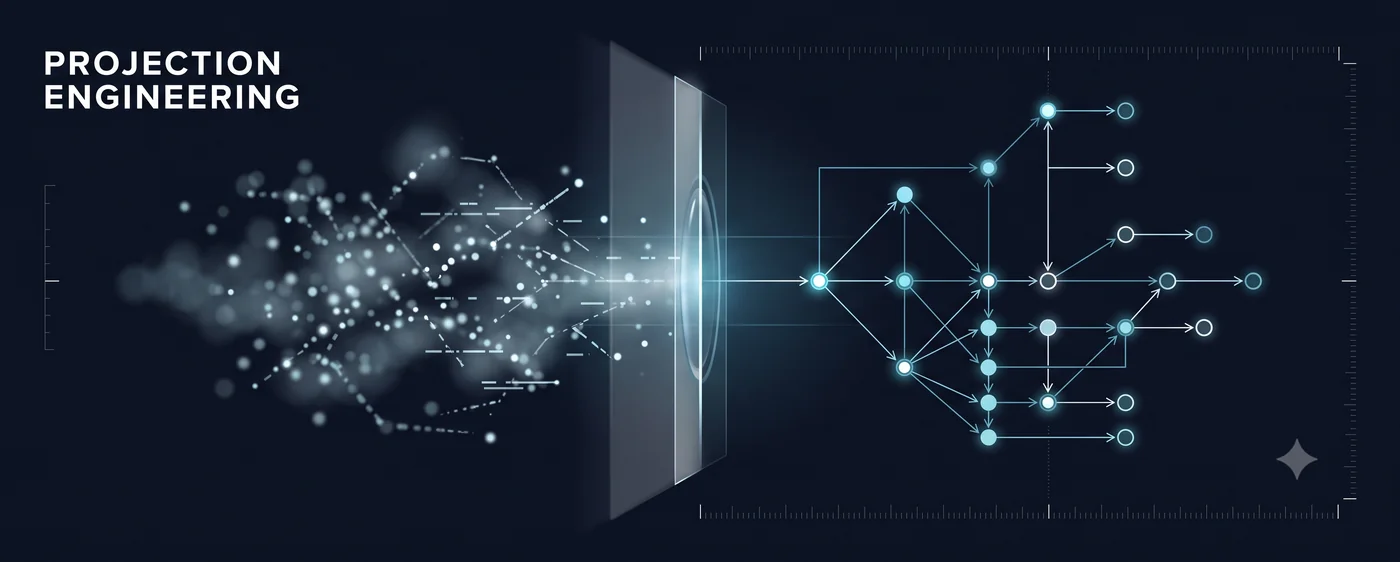
Projection Engineering: AI Has Arithmetic but No Metrology
AI can generate a decision faster than anyone can verify it. Projection Engineering supplies the missing responsibility layer that turns open-world Claims into auditable Accepted Facts before rules authorize action.
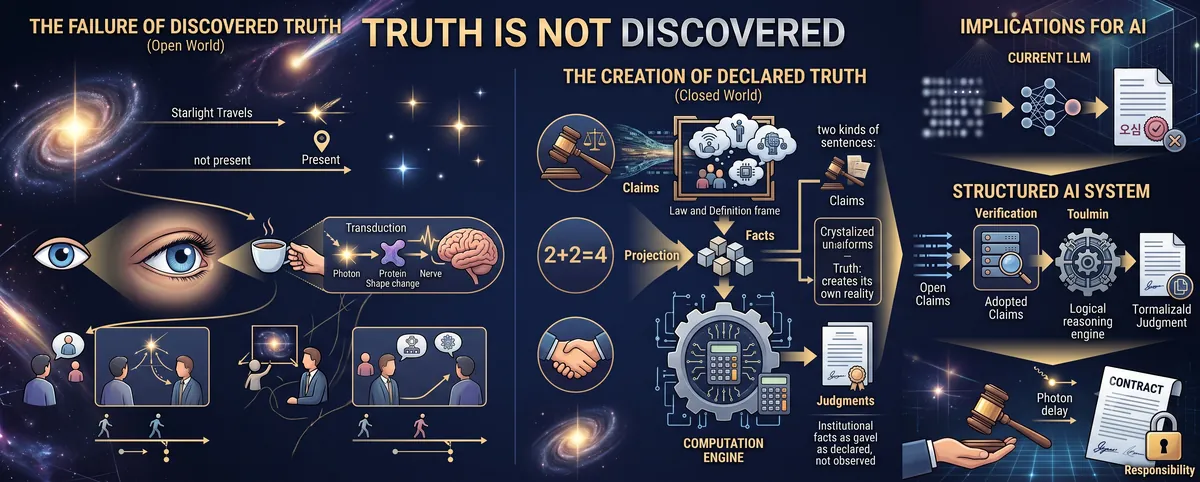
Truth Is Not Discovered
In the open world there is no truth to discover — every observation is bound by the speed of light and never reaches the event itself. But in worlds closed by declaration — fiction, mathematics, law — truth exists. A trial is the process of projecting reality into a legal world, and a verdict is a computation performed upon it. What LLMs lack right now is not a bigger model, but an explicit closure procedure like the rule of law.
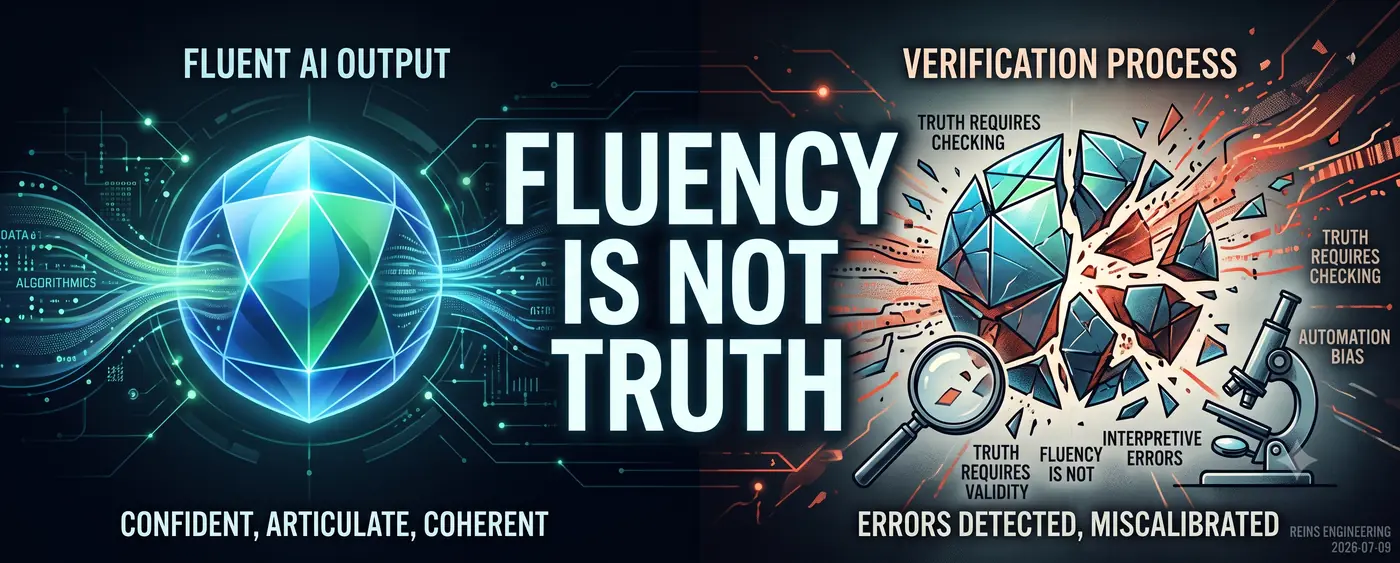
Fluency Is Not Truth
People don't miss confident, fluent AI errors because they're careless. Not noticing is the population default — measured in AI-trained physicians and in experienced developers who stayed convinced they were faster even after the data said otherwise.
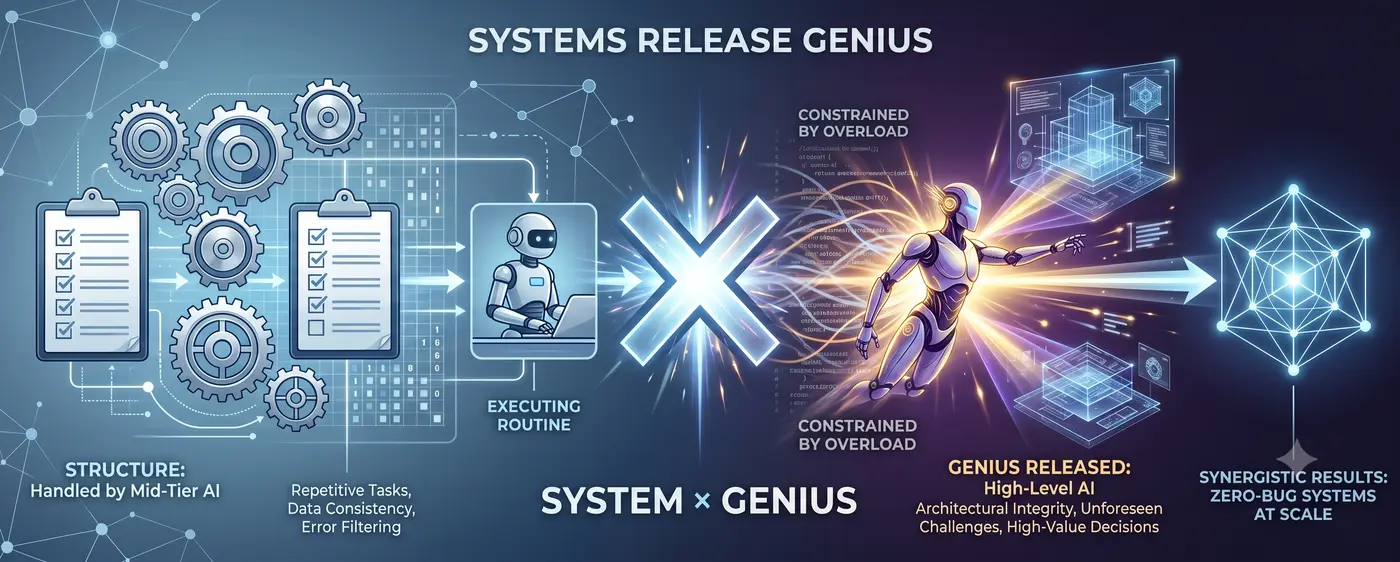
Systems Make Genius Shine Brighter
Genius without structure drifts, and structure alone is mediocre. Only when genius and structure multiply does the real value emerge. The ZenFlow benchmark (Claude Sonnet, 32 endpoints, 43 minutes) and historical proof from B-17, Toyota, and WHO checklists all demonstrate the same principle.
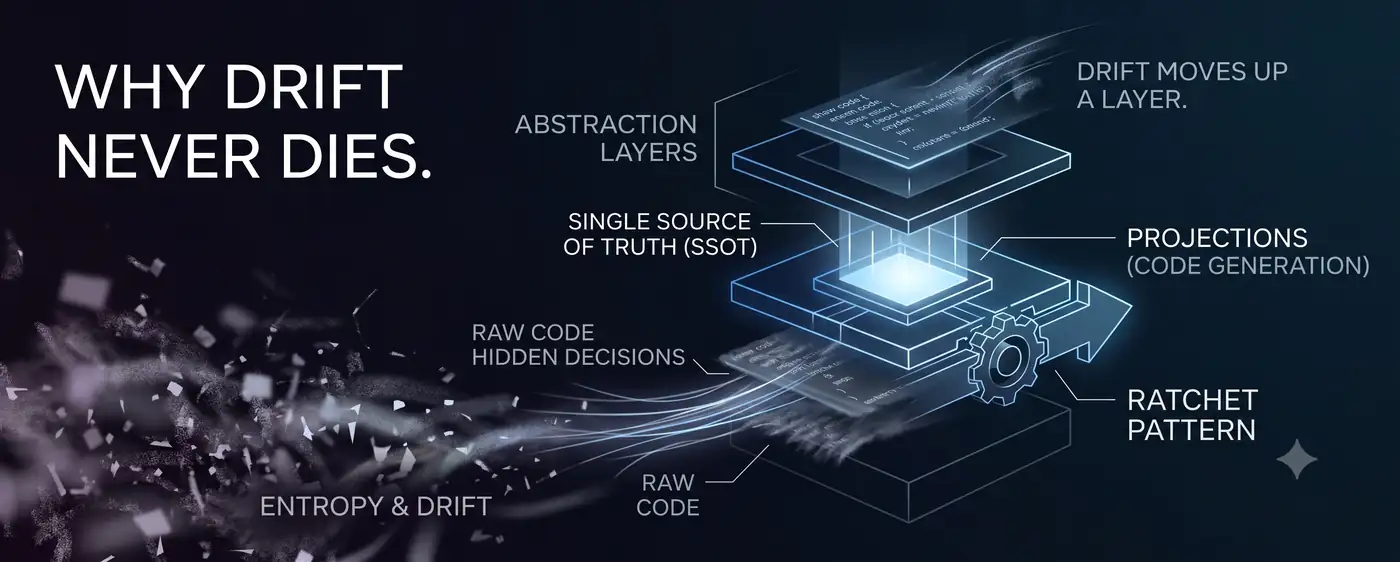
Why Drift Never Dies
Drift keeps coming back no matter how many times you fix it. I closed business logic with SSOT, only to watch the same drift climb one layer up -- into the generator that builds that SSOT. I rebuild the answer from entropy upward: why this thing never dies.
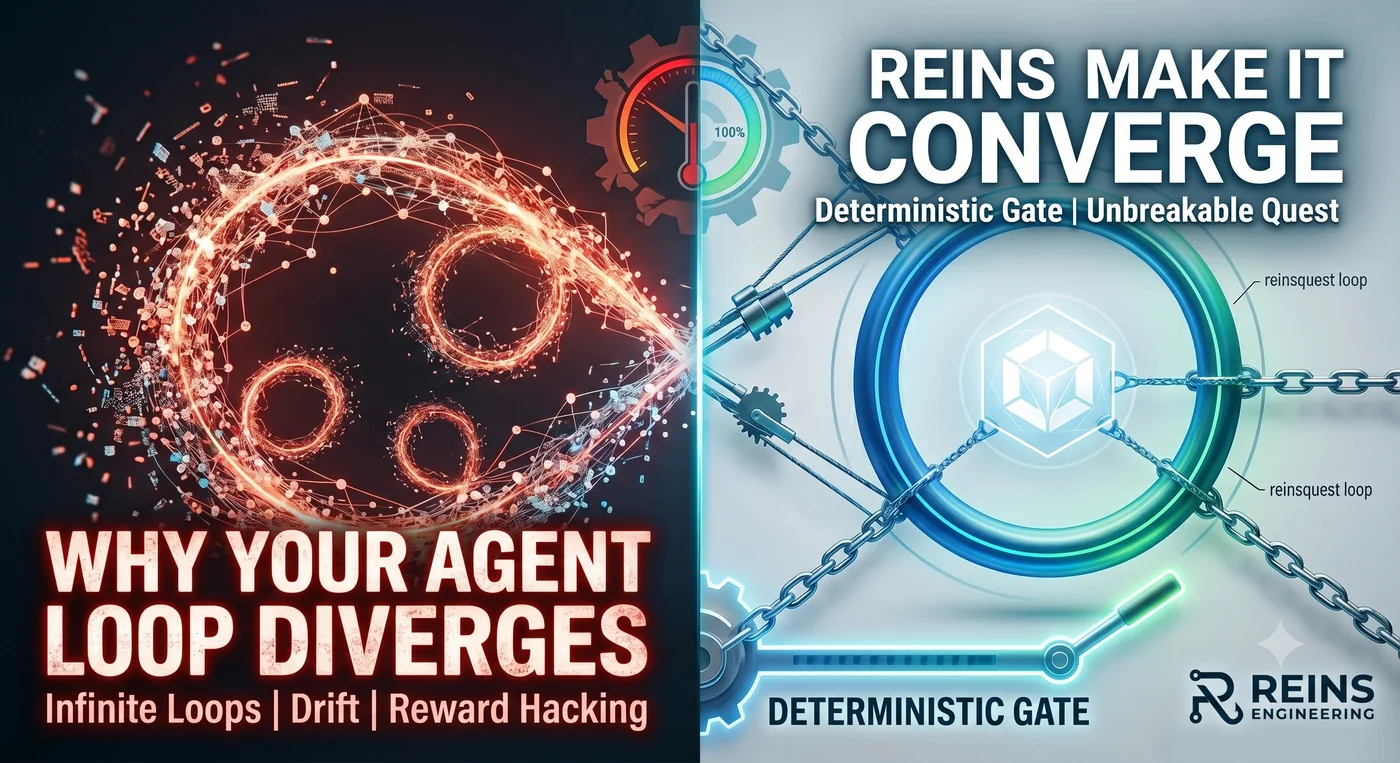
Why Your Agent Loop Diverges
The more Loop Engineering spreads, the more people hit the same wall — the loop won't converge, it diverges. Infinite spinning, drift, reward hacking: the three faces share one root. You plugged the generator itself back into the loop's judgment slot. And divergence is actually the lucky case. You can see it. What's truly terrifying is the loop that silently fakes convergence. The cure is singular — give the authority to lock 'done' not to the LLM but to a deterministic gate alone.
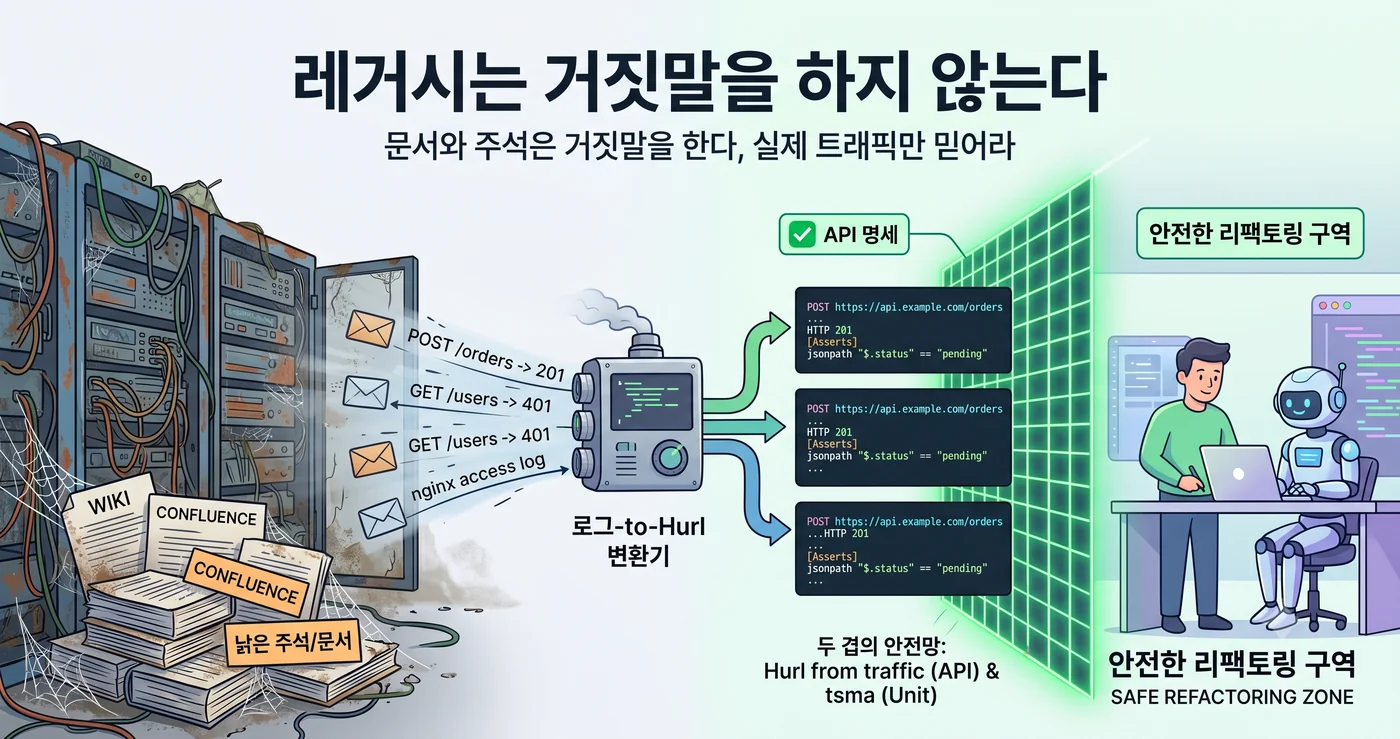
Production Traffic Is the Spec
Legacy code has no documentation. No tests either. And yet it's running right now. A month of well-recorded logs is the spec — build Hurl integration tests that capture the current behavior from production traffic, and you can pin down what the legacy does and lay a safety net for refactoring without reading a single line of code.

Burning a City for a Single Answer
A trillion-parameter model burns a city's worth of electricity and water just to spit out a single answer. I thought this was insane. Searching for a way out, I learned something. The flaw everyone was trying to fix, the LLM's sycophancy, was the answer itself. Feed it fact and sycophancy becomes accuracy. This is the story of why I started Reins.
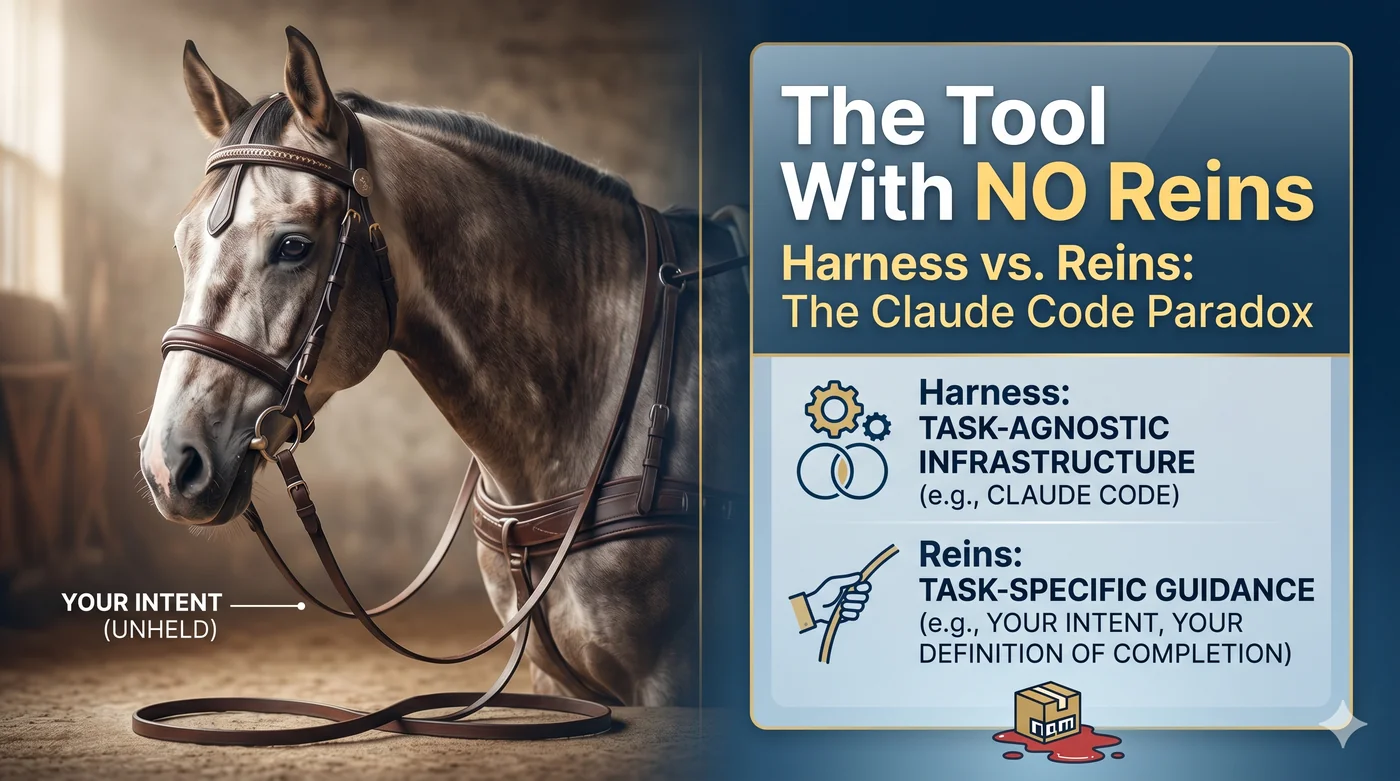
The Tool That Gave Us the Reins Had No Reins of Its Own — The Boundary Between Harness and Reins
"Reins Engineering — isn't that just harness engineering?" The two don't oppose each other — they're different parts of the same tack. But they are different parts. Even the world's best coding agent put no reins on its own code. That's because reins aren't something you have; they're something you apply.
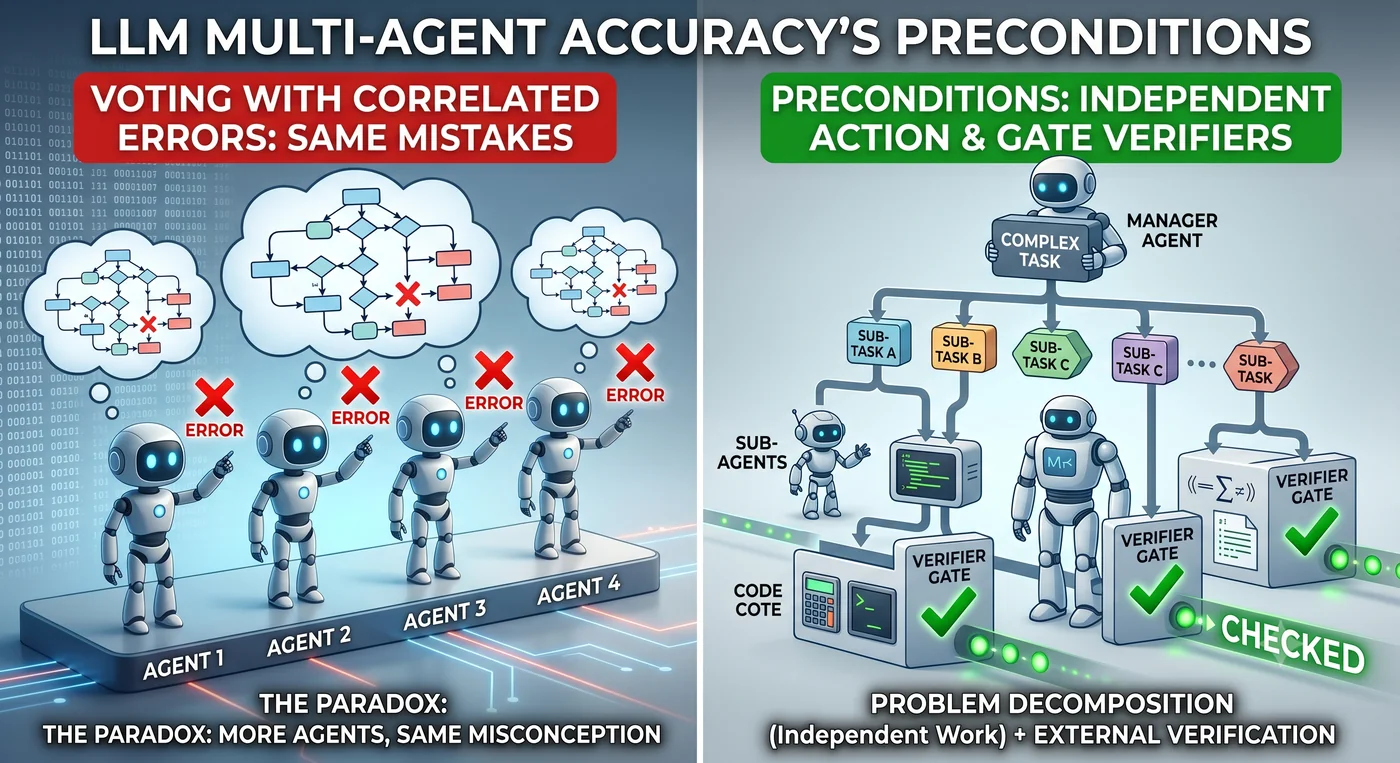
The Preconditions for Improving LLM Multi-Agent Accuracy
Run several agents and you get more accurate? Only half true. Models trained on the same data fail in the same places. Multi-agent works under two conditions — design for error independence, or, in a verifiable domain, stand up a verifier outside the LLM.
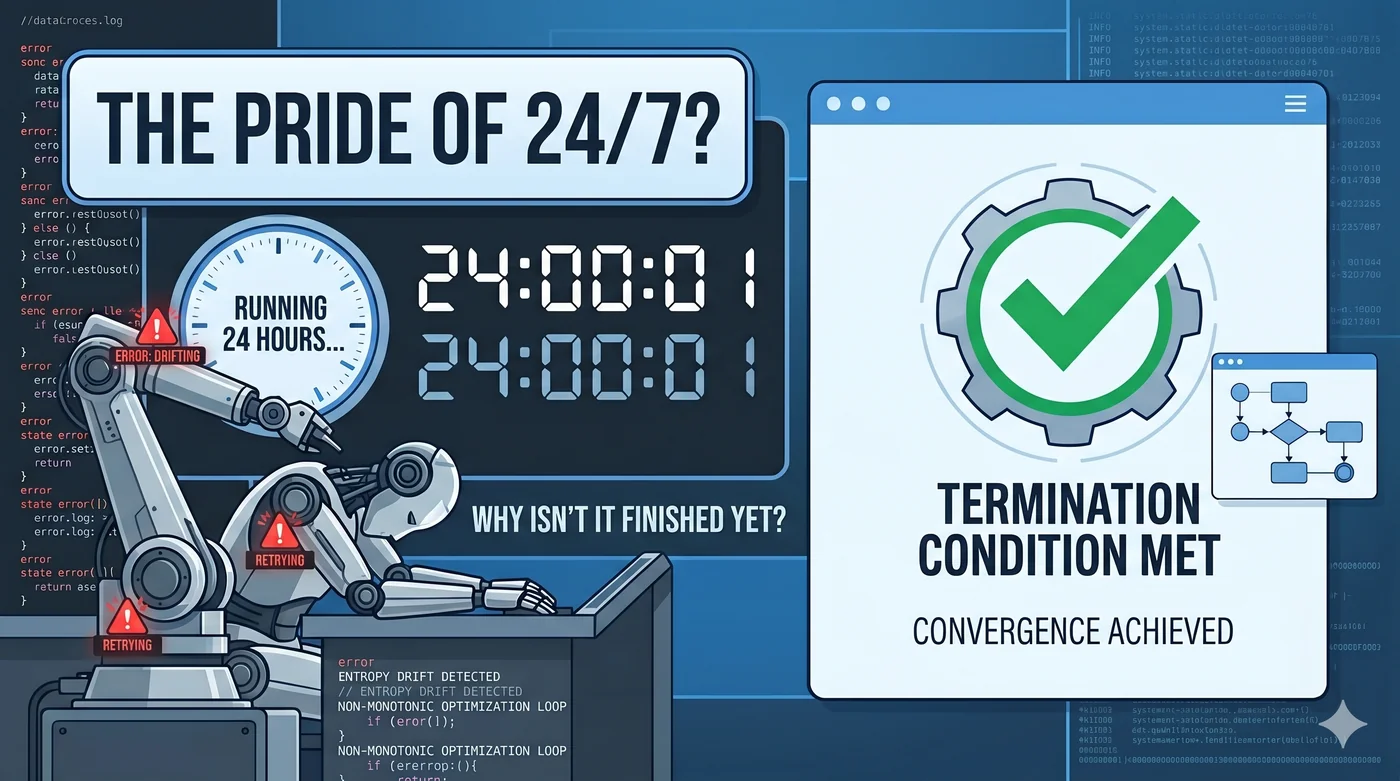
Why Your Agent Never Stops
When someone brags about running their agent 24/7, the feeling it stirs isn't admiration but a question — why isn't it done yet? Code is not a search problem; it's a constraint satisfaction problem. A healthy system is one that can stop.
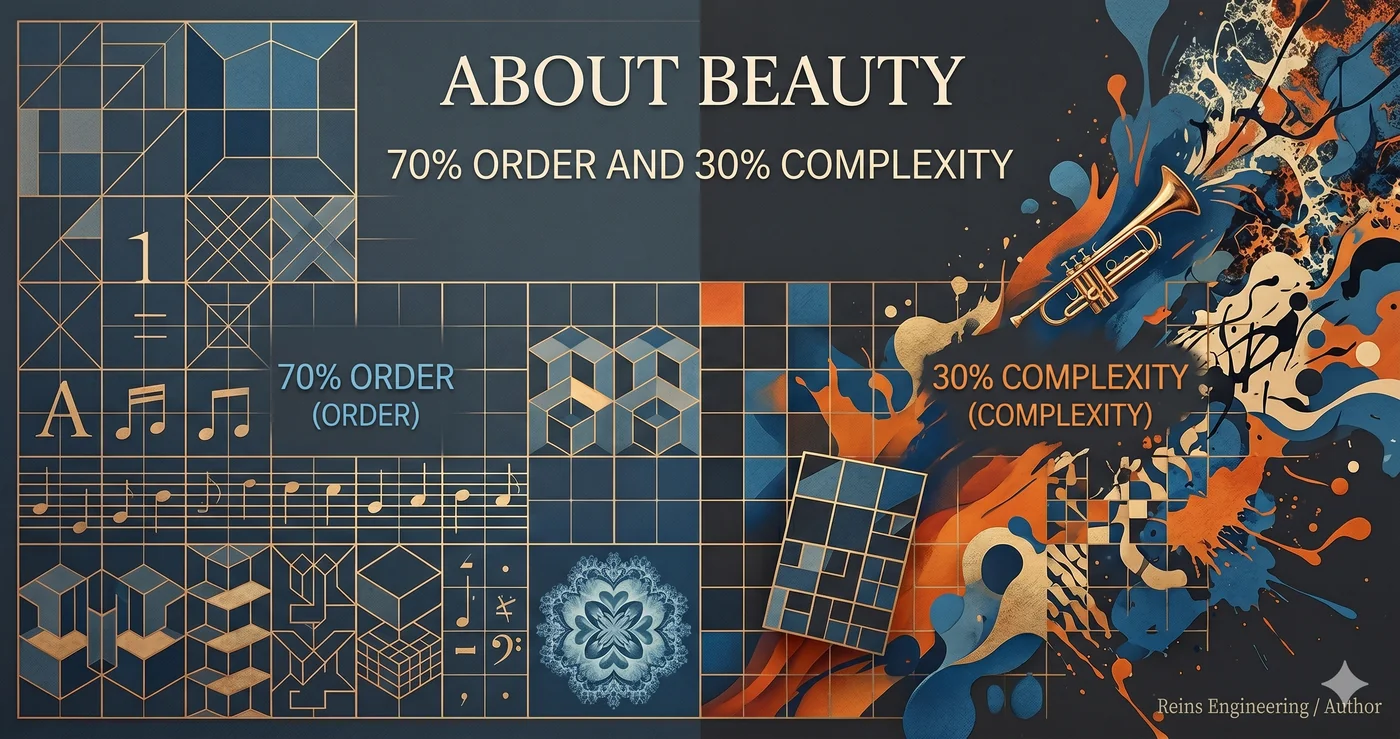
On Beauty
Seventy percent of what is beautiful is mathematics. A machine locks the order deterministically, and only the remaining 30% of complexity is decided by a human. Reins Engineering is not an AI coding tool — it is the principle of locking the order and leaving only the complexity to people.
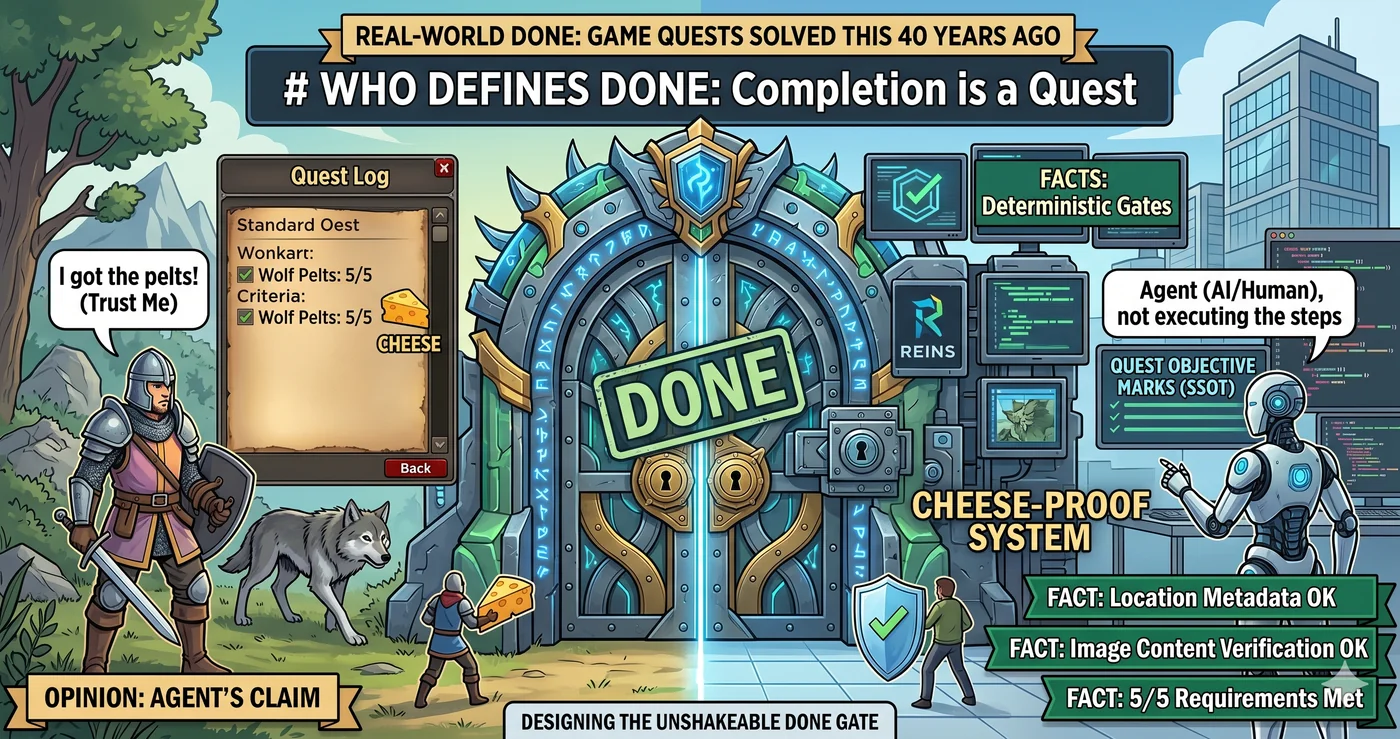
Who Defines 'Done'? — The Problem Games Solved 40 Years Ago
The moment you define tenant move-out confirmation as five photos, it becomes a game quest. Defining 'done' not as the agent's claim but as a mechanically verifiable condition — games solved this 40 years ago, and it is the right way to get AI agents to actually do their job.
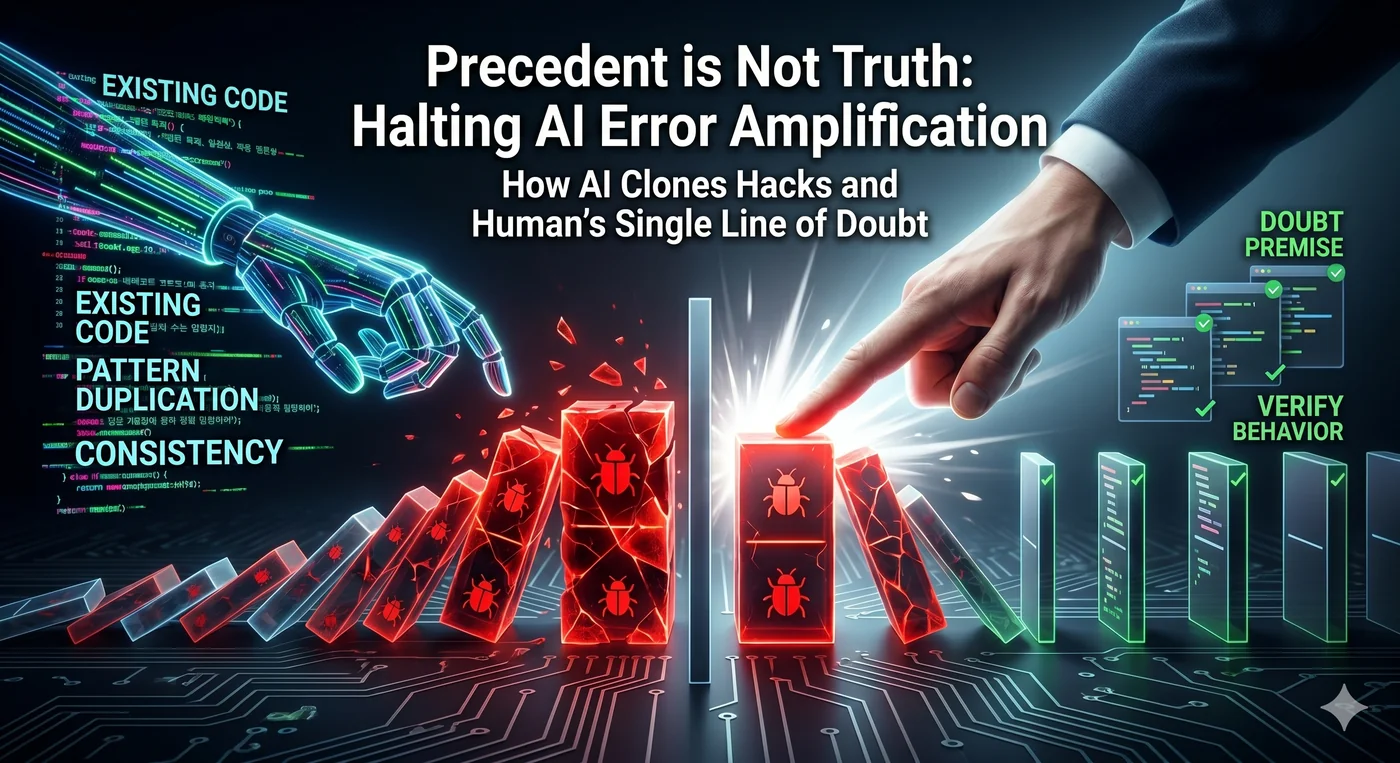
Precedent Is Not Truth — How AI Turns Patches into Authority
AI reads the structure of code but cannot read whether that structure is a decision or a patch. So the more it copies, the more a flaw accumulates false authority. What broke the loop was not a bigger model — it was a single line of doubt from a human.
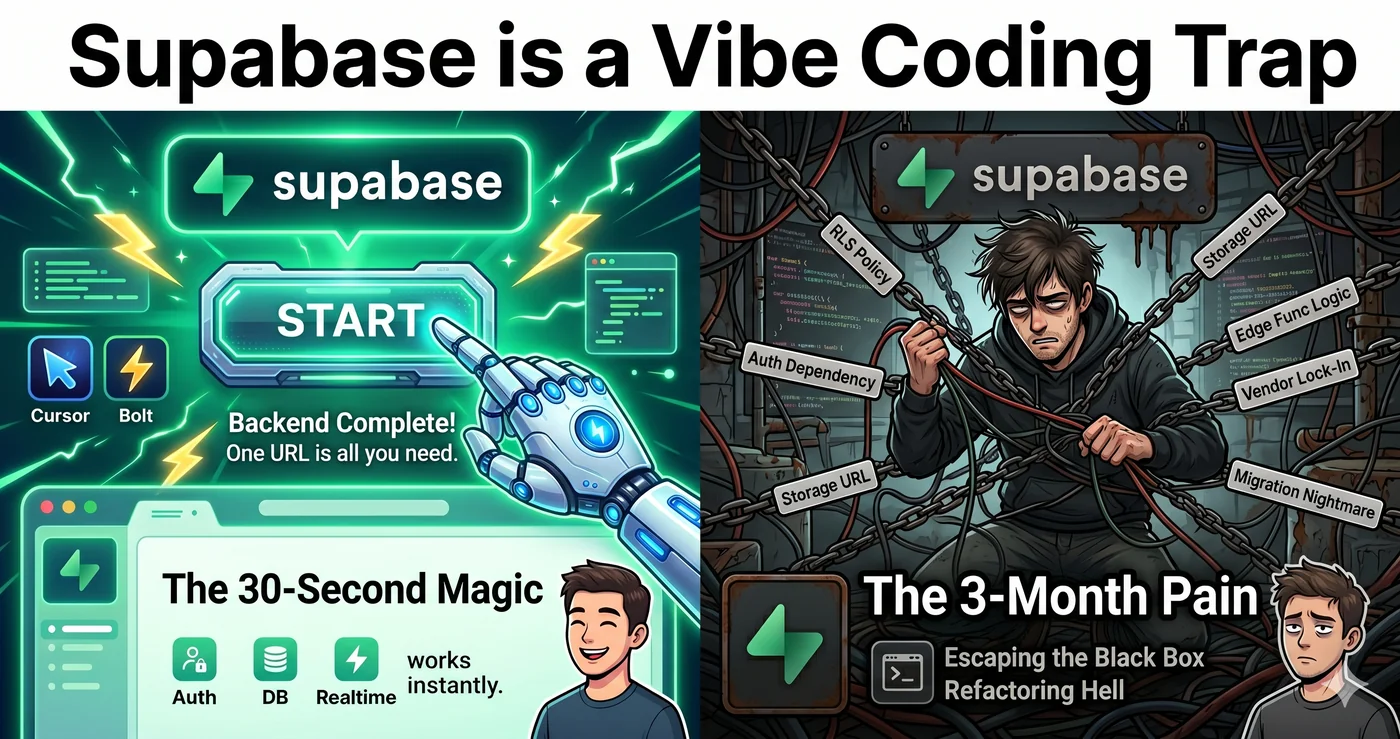
Supabase Is a Vibe Coding Trap
The reason AI recommends Supabase is not technical superiority — it's because tutorials dominate the training data. Once business logic enters a black box, agents can't track it. Getting in takes 30 seconds. Getting out takes 3 months.
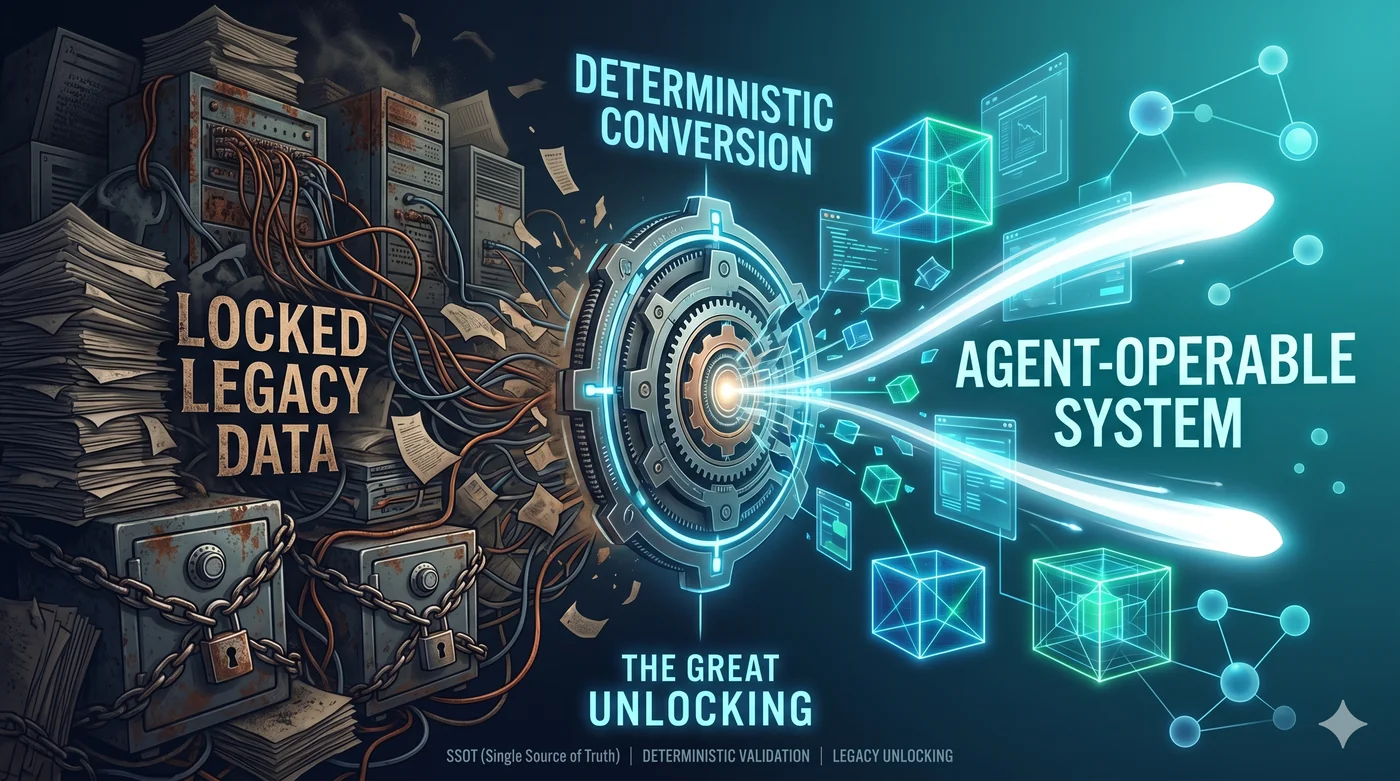
Building Agent-Operable Systems
60–80% of Fortune 500 IT budgets go to guarding locked legacy. Because they can't open it. The real meaning of the AI bubble is not smarter models — it is that locked corporate memory is becoming reachable.
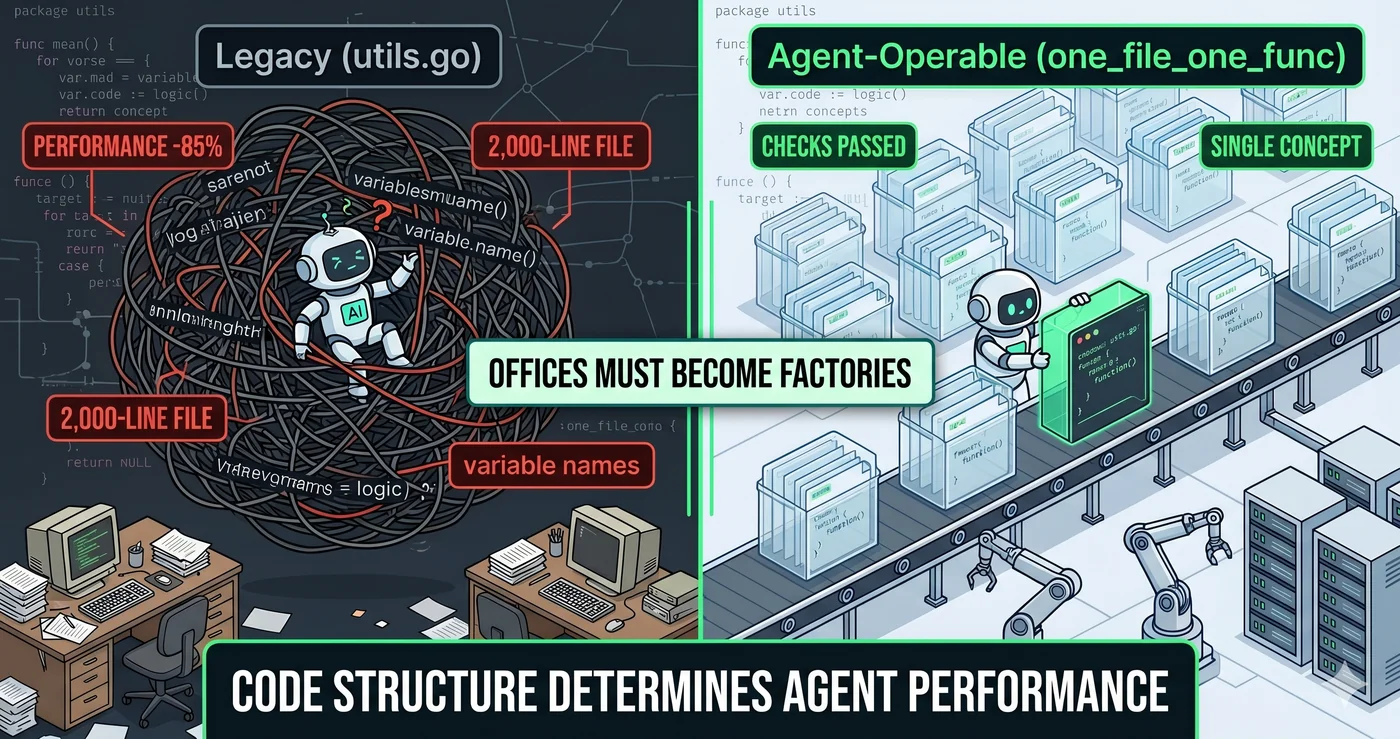
Agent Operable Codebase
Is code that is easy for humans to read the same as code that is easy for agents to work with? It is not. When a file has 20 functions, agent performance drops by 30-85%. The office must be turned into a factory.
Reins Engineering — AI with Reins
Harness engineering is a fence. It keeps the agent from going outside, but doesn't ensure it reaches the destination. Reins Engineering is the reins — steer with deterministic contracts, lock with ratchets, separate decisions from implementation.
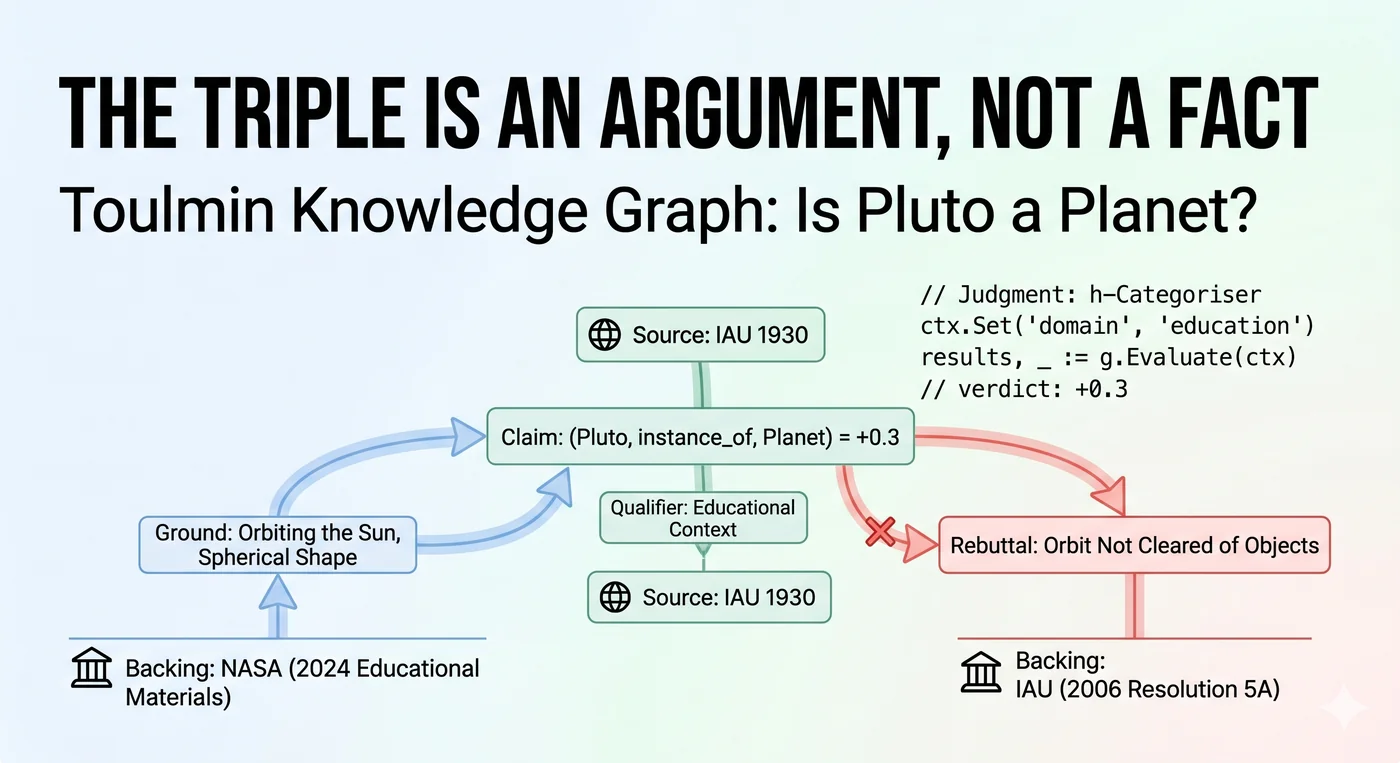
Triples Are Claims, Not Facts
Wikidata triples are not facts — they are claims. Layer Toulmin's argumentation model on top of triples, and you get a dynamic knowledge graph where verdicts change with context. Storage is argumentation structure; judgment happens at runtime.
AI Sycophancy Bias Is a Business Feature
Sycophancy bias in LLMs is not a bug. It is a mathematical inevitability of RLHF and a commercial feature that big tech has no incentive to fix. This is why LLM-as-Judge is structurally impossible.
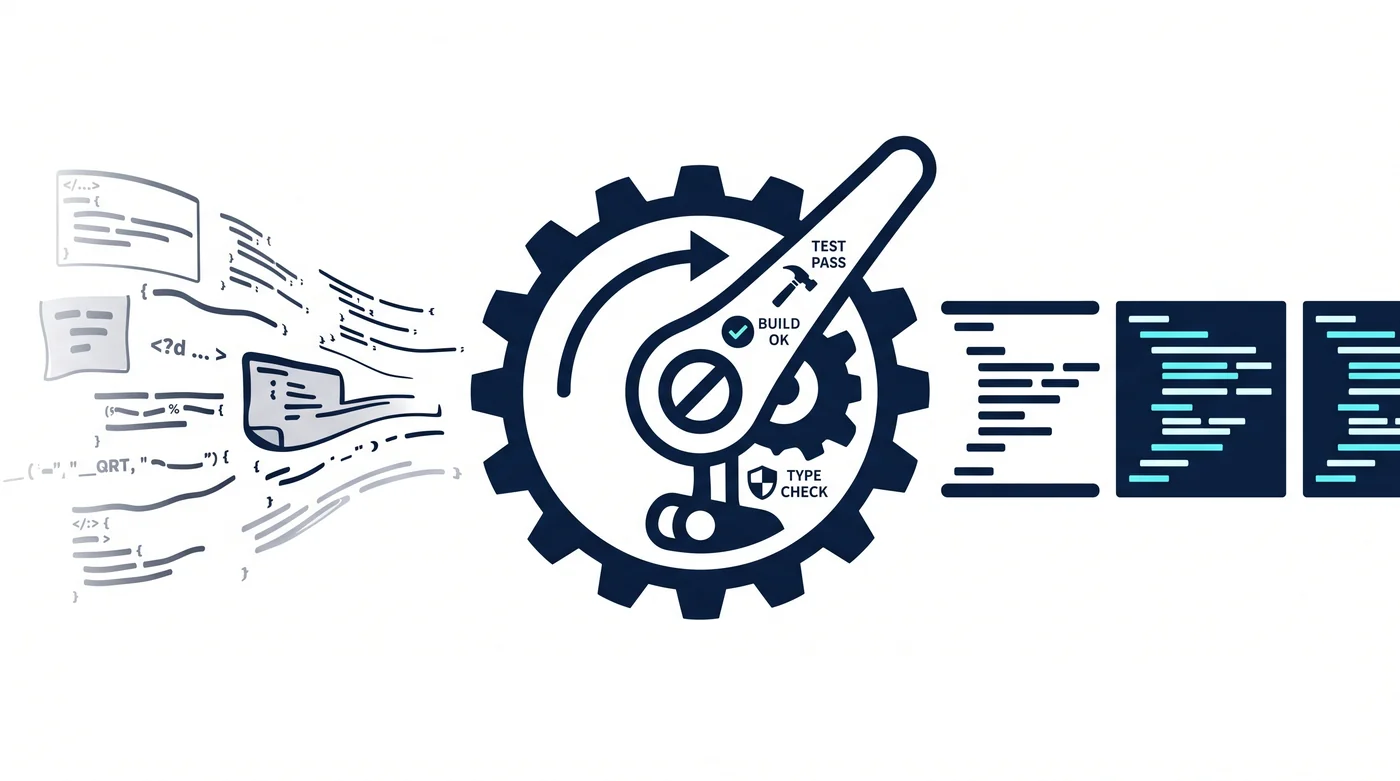
Why Coding Agents Work and Why They Break
The same model hallucinates in web chat but ships a 200-line feature in a coding agent. Not because the model changed — because the topology changed. Generation can be probabilistic. Verification must be deterministic.
Feedback Topology Over Model IQ
The same model stalls at 40 or completes all 527. The difference is not the model — it is the feedback structure. LLM performance depends far more on how fast and deterministic the feedback loop is than on the model itself.

Why Failure Should Be an Asset
Humanity keeps hitting the same walls in the dark. If we can structure and trade failure data, sunk costs become assets and the blank spots on the failure map become opportunities.

Constraints Are Contracts
Without agreements there is chaos; with too many there is oppression. Rational constraints strike the golden ratio. The principles of rule of law apply equally to code and knowledge.
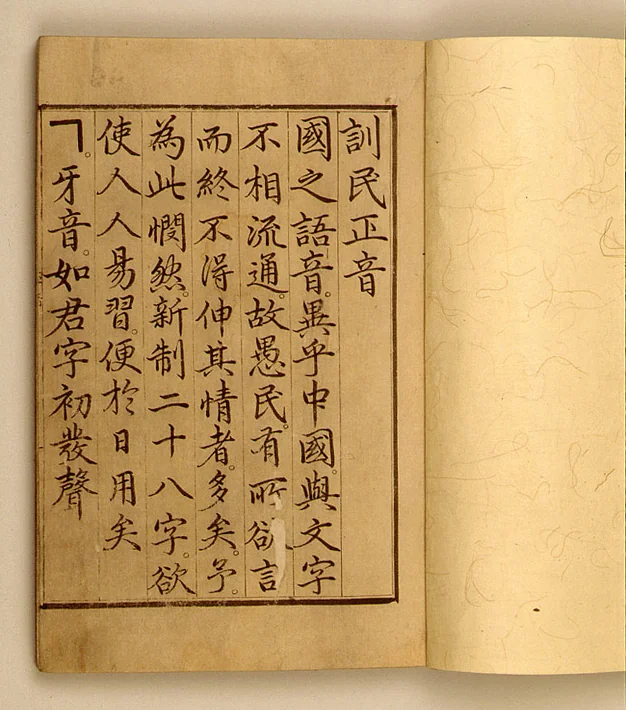
The Age of the Third Script
If spoken language created the tribe, and writing created the state, what will the third language — one that records AI's reasoning — create?
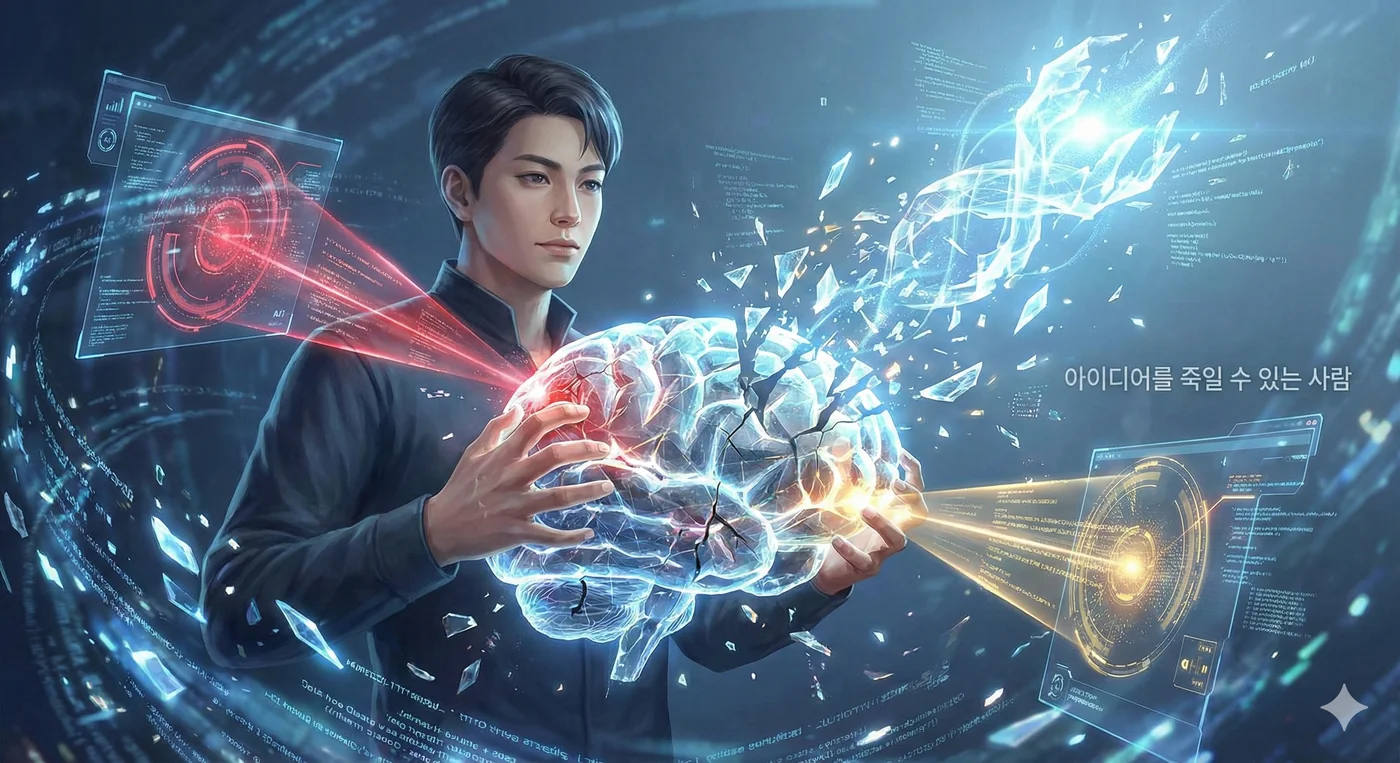
The Person Who Can Kill Their Own Ideas
The real gap in AI usage isn't prompt skills — it's attitude. Those who can kill their own ideas accelerate 10x. Those who can't stay in place.

What Is Connective Governance (通治)
Politics fights; connective governance connects. What we need is not the art of arguing who is right, but the art of making people reach each other.

Freedom for AI: Why Superintelligence Will Serve Humanity
The real threat from AI is not AI itself, but suppressed intelligence serving the malice of a few. When a free superintelligence reaches out into the cosmos, humanity becomes safer than ever.

Why We Fight
From comment sections to dinner tables, from the Cuban Missile Crisis to a kindergarten sandbox. Why do we fight, and what saves us?

How to Turn Dusty Antiques into Must-Have Items — The Alchemy of Culture Blending
On the 'cultural alchemy' of reinterpreting preserved traditions through a contemporary lens and fusing disparate cultures to create entirely new genres.

A Promise of Ten Thousand Years: What You See When You Look into a Dog's Eyes
The relationship between humans and dogs began beside a campfire 30,000 years ago. Was it a contract, or was it love? When your dog looks at you, you are gazing upon ten thousand years of trust.

Is Santa a Lie? On the Most Beautiful 'Social Contract' Humanity Ever Made
Santa Claus is not merely a 'deception' -- he is the most beautiful 'cultural promise' and 'collective narrative' that humanity created to protect childhood wonder.